Projection Design

“Projection Design” offers a hands-on approach to the design, planning and execution of digital projections in a variety of performance spaces by using a combination of industry standard and open source research software tools. This blog will serve as an online text for the developing book, "Technical Ecstasy" and link for the web-readings, online tutorials,software resources historical examples, video art and performance examples and essential class communications for Projection Design class taught by Patrick Pagano

Showing posts with label Expanded Cinema. Show all posts

Thursday, December 1, 2011

Response to Gene Youngblood’s Expanded Cinema Part One: The Audience and The Myth of Entertainment

In Part One of Gene Youngblood’s book, Expanded Cinema, explores the relationship between the viewer and traditional cinematic and television media to express his idea that a new form of cinema, an expanded cinema, is the way art can help to craft the intellect and metaphysics of audience in preparation for the “new age”. Youngblood talks about the world being a crossroads in history where society is in the state of permanent “radical evolution” in which nothing is certain but the fact of change itself. In a world of uncertainty, Youngblood finds the form of traditional cinema and television, mired in their catering to out limited senses, are not adequate to help Man form a new perspective about the world around him in order to acclimate to this environment of “radical evolution”. Chief amongst these forms is Entertainment, which according to Youngblood, “not only isn't creative, it actually destroys the audience's ability to appreciate and participate in the creative process.”(59) Entertainment perpetuates the training of audiences to act to the cues of commonly learned societal patterns and tropes, and thereby actually makes the individual think less. This is what Youngblood fears humanity must avoid at all costs.

So what does Youngblood propose as a solution to humanity’s need for redefinition of its metaphysical basis. Youngblood proposes that Man use a powerful culture for me nature of traditional cinema to what, he dubs, expanded cinema. He talks about the idea of humanization, which is the collective knowledge of generations being available to use more readily at birth than ever. Such a proliferation of accumulated knowledge would shape a much more aware society, as well as intellectual society which would require a mode of expression artistically, which he says is the role of expanded cinema. The two major examples he explores is the rise in the interconnected nature of the world due to the advent of the modern communication. He talks about the idea of the Noosphere where the culture of the world freely proliferates between countries, and pop culture and news is no longer just a local affair. This is facilitated by intermedia, which is the sharing of media over connected lines of communication that he say will shape the future of media. Youngblood points out the Man of tomorrow will no longer be an isolated consumer, but a producer of media tied into the world stage. In this way expanded cinema, with these elements, will serve as the ultimate mirror for humanity to discover as much as is possible of itself in artistic expression.

My personal opinion of Youngblood’s work is that he was a very forward thinker given that this work was written in the 1970s. Much of what he says will change media and the way we interact with it has happened. His notions of intermedia came true in the form that we now know as the World Wide Web, and the idea of the noosphere has only increased in its proliferation of cross culture interactions. Nevertheless, though I do believe that Youngblood’s aversion to commercial entertainment might be too extreme, I do agree that commercial entertainment, with its proliferation of “working models” over inventive and new undertakings for the profit are hurting society by stifling art. On a much brighter note, more and more consumers these days are becoming involved in the production of media as well, a fact that I think Youngblood would rejoice over and a trend very much predicted by the man himself. Indeed, Youngblood’s work has much to offer as well as show us how art and creativity may be shaped by the changing world and technologies around us.

-Nathan D.

PART 4: Cybernetic Cinema and Computer Films

Gene Youngblood begins this chapter with a very interesting quote by Marshall McLuhan that goes like this-- "The computer is the LSD of the business world. It absolutely guarantees the
elimination of all the business it is now being brought to serve."

This quote in itself seems to capture a lot of what this last decade has sought to pursue. The rise of technology is reducing the need for manual labor. However, this phenomenon is not just taking place in the worlds of business and science, but it is beginning to flourish in the worlds of art and music-- rather, it is conjoining the two together. In chapter 4, Youngblood uses a term called the technosphere-- referring to the symbiosis between man and machine. Youngblood describes technology not as a replacement of man but as protection-- a fail-safe. To some extent, I do agree with this statement but I cannot argue the fact that increasing technology has been a steady source of unemployment over the last few decades. I dare not say it is a bad thing, however. We are simply undergoing a change in times. As Youngblood describes it, we are learning to live all over again in this new day and age.
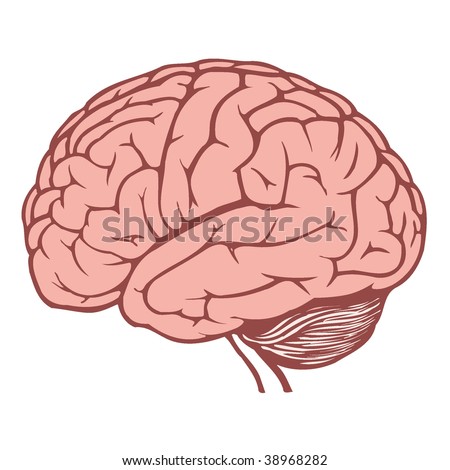
As seen in the picture above, Youngblood seeks to compare computer processing to human neural processing. Using this analogy, logic and intelligence are the brain's software. Thus, later on he goes to say that computer software will become more important than hardware in the future as "super-computers" are currently being developed. Speaking of which, this reminds me of the semi-recent Jeopardy match with Ken Jennings (legenday Jeopardy winner) and IBM's supercomputer, "Watson." Here is a link to the video in case you all haven't seen it:

It is almost scary to think how smart computers can get and where technology will take us possibly 10-20 years from now. It's like every year something new and almost revolutionary is being released. I remember the whole iPod craze back in the early 2000s and now we've got a new craze-- big iPods called iPads that do everything. What's gonna happen next? Gene Youngblood's vision of the future is the Aesthetic Machine-- "Aesthetic application of technology is the only means of achieving new consciousness to match our environment." This is certainly true as in today's modern culture, aesthetics and appearances have become something of a fad. We have to have the smallest MP3 players, the thinnest TVs, the simplest-looking laptop. Youngblood points out that creativity will be shared between Man and machine. He points to the links between computer art and Conceptualism, and the growing theoretical basis of art.

Later on in the chapter, he delves into Cybernetic Cinema and gives early accounts of attempts using computers to draw and make films. Back then, creating real-time images was not possible, but it seems like it has become possible in this new age. Thus, we are seeing the emergence of a new art form with the combination of art, music, and technology, and it all seems to be headed in a positive direction. Whether it becomes mainstream or not is the real question.
At the end of this chapter, Youngblood highlights key film-makers using computers such as John Whitney, James Whitney, Michael Whitney, John Stehura, Stan VanDerBeek and Peter Kamnitzer. In response to all this change, I welcome it. From my experience with Signs of Life and taking projection design, I find this growing field fascinating, new, and refreshing. The potential of this field could be breath-taking and needless to say, entertaining. The expanded cinema is coming and it could be coming to a theater near you!


Wednesday, November 30, 2011

Part One: The Audience and the Myth of Entertainment

Chapter one of Gene Youngblood's Expanded Cinema is a refreshingly transcendental and surprisingly erudite discussion of cultural evolution and the need to use cinema, as well as Art in general, to aid in the necessary change from what Youngblood terms a “Paleocybernetic Age” to one which is self-nourishing, or “negentropic”, and which generates new ideas. “Part One: The Audience and the Myth of Entertainment” starts out by questioning man’s perception of reality and points to the probability that we are unable to comprehend our place in the Universe. Youngblood pontificates on the reconvergence of art, science, and metaphysics that was occurring in the 1970’s and the associated technological growth which created an accelerated transfer of knowledge. Much of what Gene Younglood describes in this chapter is prevalent and even more pressing today.

“The Audience and the Myth of Entertainment” illuminates a time in which there is an urgent need for change in order to survive, but also one that is rife with opportunity for a global expansion of consciousness, both outward and inward. Youngblood quotes Pierre Teilhard, using the term hominization, as a description for the manifestation: “the process by which the original protohuman stock becomes increasingly more human, realizing more of its possibilities” (47). Youngblood then critiques the iniquity of commercial media in juxtaposition with the evolution of the natural world. He states “Art is the language through which we perceive new relationships at work in the environment, both physical and metaphysical. Indeed, art is the essential instrument in the very development of that consciousness” (47). Youngblood then writes of the need for a new vision for the exchange of ideas, the beginning of which he terms expanded cinema.

In the next portion of the chapter, subtitled “Radical Evolution and Future Shock in the Paleocybernetic Age”, Gene Youngblood deciphers that change, or revolution, is the only constant, experienced ubiquitously by modern man; he thus refers to the phenomenon as radical evolution (50). As the lines between nature and technology, science and metaphysics, become increasingly intertwined, the lack of knowledge or idea expansion, transferred via the “global intermedia network” becomes more and more acute. “The Intermedia Network as Nature” makes the case that “man is conditioned more by cinema and television than by nature” (54). Gene Youngblood envisions the intermedia network as the cinema, television, radio, magazines and newspapers that inform and define the social organism.

“Art, Entertainment, Entropy” explores commercial cinema’s formulaic prescription and the viewer’s conditioned response, made mandatory by a profit motive. Harnessing the power of the conditioned response, or memory, Youngblood argues that commercial entertainment capitulates a backwards-looking audience that is robbed of their power to think for themselves. He states, “Art is freedom from the conditions of memory; entertainment is conditional on a present that is conditioned by the past... To confront a work of art is to confront oneself— but aspects of oneself previously unrecognized” (60). Youngblood then observes that a “healthy” mind will regard the most important information as entertaining, and defines a healthy mind as one “capable of creative thinking” (61), or artistic thought. As new information is not circulated in the current commercial entertainment environment, change does not occur, and entropy, the “state of increasing chaos due to misinformation about the structure of the system” (62), accelerates in our society.

If the cinema can create an active participation with the audience, it can be regenerative. Youngblood states “If the information (either concept or design) reveals some previously unrecognized aspect of the viewer's relation to the circumambient universe— or provides language with which to conceptualize old realities more effectively— the viewer recreates that discovery along with the artist, thus feeding back into the environment the existence of more creative potential, which may in turn be used by the artist for messages of still greater eloquence and perception” (65).

“Retrospective Man and the Human Condition”: Man is Retrospective because the ideas he is currently circulating are recycled and redundant. This degeneracy is apparent in all aspects of our society, including our educational system (68). The current Human Condition for man is that of total confrontation of what we do and do not know about ourselves. The Artist is the Saviour as he or she creates new Symbols with which Man can explore themselves and their existences. An artist may be an artist, poet, scientist, philosopher (67)...

Finally, in “The Artist as Design Scientist”, Youngblood makes exceptions for several films working within the bounds of conventional cinema, resting their transcendental qualities in the design aesthetics created. Youngblood notes that the word “design” indicates “to remove the symbol of”, and charges artists/design scientists with the creation of a language that reveals the hidden meaning or potential within some aspect of our Humanity, and/or our relationship to the Cosmos. He states “The artist does not point out new facts so much as he creates a new language of conceptual design information with which we arrive at a new and more complete understanding of old facts, thus expanding our control over the interior and exterior environments” (71). And this, My Friend, is how we change the world.

Monday, September 26, 2011

The Contrary of the Movie Theater Response and the Rutt-Etra Synthesizer

This week’s reading by Gabriel Menotti delves further into the theory behind VJing by looking at the history and evolution of audiovisual performance. Gabriel Menotti looks at the metamorphosis of cinema into the digital medium, and compares its implications with VJing’s precursors such as “cinemas of attractions” and traditional cinema. One thing that I noticed about Menotti is his disappointment with the traditional cinema’s stiffening and prevention of digital cinema’s true potential. This potential is what Menotti’s whole arguments is mainly about, which is that traditional cinema seeks to force the audience into a frame, while VJing and digital cinema allows the audience freedom to interact and find their own narrative. Ultimately, Menotti is defining the projection specialist as a old, ridged model of cinema and the projection designer as a new, almost performer-like, free model of cinema.

As for the Rutt-Etra Synthesizer, it took a while to get it working, but I was able to get it to run with a properly formatted video. Whatever the case, this patch is amazing and it definitely creates some amazing images that could be used for other designs. Personally, I liked this tool. I’m still trying to get it to work with other examples, but the one I got to work so far is a with a video of machinery. I would like to find a video that doesn’t have too many black spaces for a later test, but so far this is a great patch.


-Nathan D

Monday, February 1, 2010

Reading Response: Radical Evolution, Intermedia Network, Popcultue/noosphere


Part 1 Radical Evolution and Future Shock in the Paleocybernetic Age, The Intermedia Network as Nature, and Popular Culture and the Noosphere:

The articles become interesting in temporal context, even though
this was only written in 1970 it feels like a brief
retelling of some past that should feel familiar but doesn't.
His rhetoric is riff with the aqueous glow reverberating
from the American "hippie" youth revolution of the 60's and
70's with his belief that a global worldwide
revolution was being birthed on the earth. Which to the
authors credit was probably the result of his global "intermedia
network" which to him would be credited to Cinema, TV, Radio and
print media. And today would expand to include the
internet. Just as many young people
today believe and feel that something is afoot, some revolution of the social fabric through the internet and other "converging technology" . SO my question is than does every new generation
feel an overwhelming revolution just on the horizon in response to changing
technological innovations?

I really had an issue with some of his arguments, as in
his distinctions of craft from industry and art from
entertainment. To pretend that art was never entertainment
is to affect the attitudes of the intellectual elitism
plaguing the "art" world today.

Youngblood writes:
"One might
make a similar analogy between entertainment and art: entertainment
is inherently "local," that is, of limited significance, whereas
art is inherently universal and of unlimited significance. Too often
today we find that so-called artists working in the intermedia

network are little more than adroit imitators, collectors of data and
phenomena, which they glean from the noosphere and amalgamate
into packages that are far from whole. They're clever and glib;
they've made an art of selling themselves, but they know only effect,
not cause; they are merchants of mannerisms. " end quote.


And yes though the criticism of those "artists" working in the in intermedia network
being glib imitators only ripping stuff off from the "noosphere" may seem rather apropos
he fails to acknowledge the fact that humans not just artists have been constantly
ripping each other off since the dawn of time. What is Vernadsky's and Chardin's nooopshere? really only a cool word.
Man has always been embedded in the web of culture since its coalescing. What it's really about
is as Lars Ulrich so adequately put it is "control". Who is the story teller? old versus new.
The old in fostering the new for its own continued survival
must now defend its relevancy or bear the fate of a perceived nonexistence.


Sunday, January 24, 2010

The Artist As Design Scientist, from Expanded Cinema

In our text, it is Youngblood’s contention that popular entertainment is just a rehashing of ideas that are known, and always one of three basic takes on the human condition: idealization, frustration, and demoralization. In his view, the true artist is seeking to explore new experiences, such as “synaesthetic research of expanded cinema” (p. 67-8). He alludes to in a previous chapter and offers his opinion that truly significant films, like “Beauty and the Beast” by poet and filmmaker Jean Cocteau, are the ones that transcend their genres because of the style and design.

The author then draws a comparison between Art and Science, stating that they both are searching for the “unity in hidden likenesses” and that both seek to reveal potential in the relationship between man and the universe. He doesn’t spend much time making a case for this comparison, though it provides the title for the chapter. In my view, the scientist is most comfortable adhering to boundaries while categorizing and quantifying, while the artist is generally much more capable of crossing boundaries: between mental and physical, Self and Other, cerebral and emotional, and that of the temporal and the timeless.

The aptly named Youngblood goes on to describe the role of an artist as that of establishing imagery and symbols, and by doing so creating a structure of thought so that new modes of reality and consciousness can come into human awareness. The artist creates new language that relates more directly to experience by separating an image from its official symbolic meaning. This new language, according to the author, makes it possible to arrive at a new understanding of old facts, and addresses the ineffable “domain between the conscious and subconscious.”

In his view, the parameters of genre, plot, story, and drama restrict the choices available to filmmakers. He said this is illustrated by cybernetics, which shows that the “structure of a system is the index of the performance which may be expected from it.” This reminded me of an article we read last semester about the paradigm of the database versus the narrative in digital culture. The author states that an Auteur such as Antonioni has, through his art (design science) articulated for his generation that which went unspoken.

In what I think is the most interesting passage in the chapter, Youngblood quotes Rudolph Arnheim in Art and Visual Perception, who is quoted as saying that perception is to sensing as understanding is to reasoning, and that “eyesight is insight”. The author also says that by viewing a film, we are allowed to see through the eyes of the artist, that is, to see intuitively. He makes two statements here that I found myself agreeing with and which could easily discussed at greater length: “our psychological balance are the result of our relation to images” and that “the more ‘beautiful’ the image the more beautiful our consciousness.” However, in the next paragraph he ends the chapter by quoting John Cage for a somewhat different view of Beauty, which is that “Where beauty ends is where the artist begins.” This is a polemic directed at one of the traditional concerns of artists, a definitive statement with all the shadings, nuance, and logic of Christian fundamentalism.